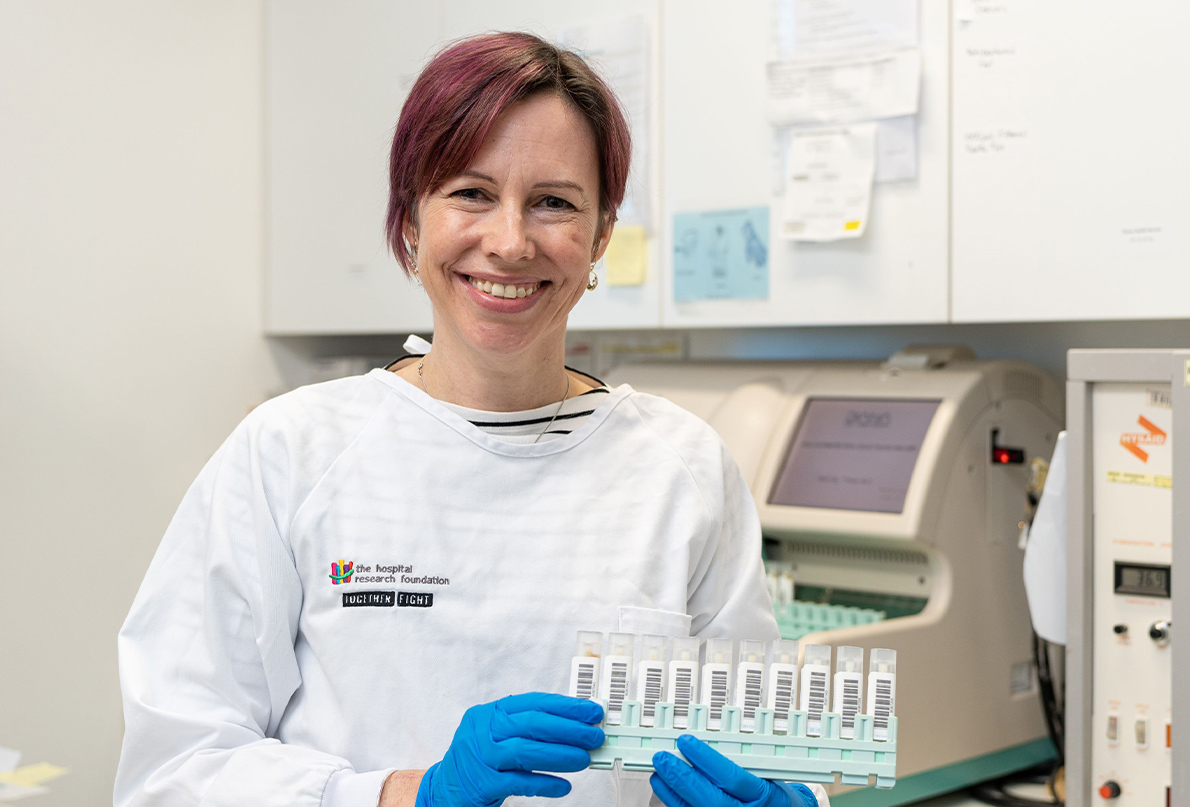
Photo: Research lead Associate Professor Erin Symonds
A new study has found that combining two simple stool tests could improve the early detection of bowel cancer and inflammatory bowel disease (IBD).
In work funded by The Hospital Research Foundation Group, thanks to your support of the Home Lottery, researchers at Flinders University analysed results from almost 2,000 people who were scheduled for a colonoscopy.
Colonoscopy is the gold standard of bowel cancer diagnosis and screening, but with waiting lists sometimes stretching for months in public hospitals, the dual tests are being investigated as a faster way to identify those at greater risk of bowel cancer.
Research lead Associate Professor Erin Symonds (pictured) said participants completed the stool tests while waiting for their scheduled colonoscopy.
From the dual tests, one of the tests looked for tiny amounts of hidden blood from the bowel, a common marker used in bowel cancer screening, while the other detected inflammation associated with IBD and other gastrointestinal conditions.
The test that detected hidden blood identified 71% of cancers in the cohort, and when the inflammation test was added, cancer detection increased to 79%.
For inflammatory bowel disease, the test looking for hidden blood detected 37% of IBD cases, and this rose to 63% when the inflammation test was added.
And detection of advanced pre-cancerous polyps improved from 37% to 47% when both tests were combined.
A/Prof Symonds said the findings were validated once the participants’ colonoscopy results came back.
“While the gold-standard for diagnosis is a colonoscopy, recent data has shown that some patients face at least an 83-day wait for the procedure. Alternative methods need to be considered to help triage those at greater risk,” she said.
“Our research findings show that combining two simple stool tests may help us pick up more serious bowel conditions earlier.
“Earlier detection gives people the best chance of effective treatment and could help reduce future cancer risk.”
Thank you to all our ticket buyers who made this breakthrough possible.